USMC Drone War: Lightweight Counter-Drone Tech
The Evolving Threat Landscape: Drones in Modern Warfare
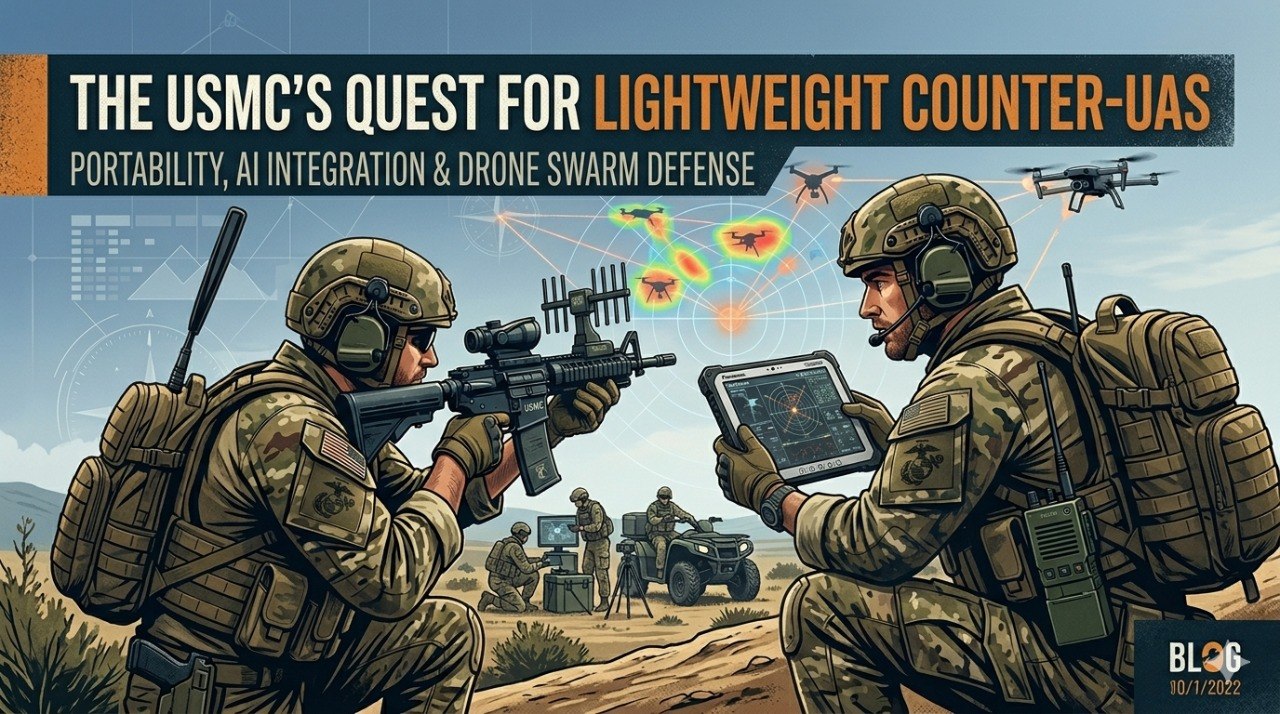
The 21st-century battlefield is increasingly defined by drones (UAS). They've altered tactics for reconnaissance, surveillance, and strikes, used by both state and non-state actors. The US Marine Corps (USMC) faces a dual challenge: leveraging its own drone capabilities while defending against enemy UAS. Expeditionary deployments and rapid force projection demand mobile, adaptable, and lightweight solutions.
This has spurred a focus on counter-drone (C-UAS) technologies for expeditionary operations. Detecting, tracking, identifying, and neutralizing enemy drones quickly and efficiently without heavy systems is paramount. This aligns with emerging USMC requirements, signaling a critical juncture for its future airpower doctrine and technology investment.
USMC's Push for Lightweight Counter-Drone Solutions
The USMC seeks solutions for rapid deployment by small units, integration into existing frameworks, and minimal logistical support. This 'lightweight' requirement enhances operational tempo and survivability. Heavy, power-intensive C-UAS systems are ill-suited for dynamic, dispersed Marine Corps missions.
Key capabilities sought include:
- Rapid Deployment: Systems operational within minutes.
- Portability: Lightweight components for individual Marines or small teams.
- All-Weather Operation: Robust performance in diverse conditions.
- Multi-Sensor Fusion: Integration of RF, electro-optical/infrared, and acoustic detection for accuracy.
- Scalability: Solutions adaptable to mission and threat levels.
The USMC's focus reflects a broader trend: the 'drone swarm' threat and ubiquitous aerial surveillance/attack. Companies like Thermonix Corporation explore how miniaturized, high-performance infrared sensors can improve detection of small, low-observable drones. Advancements in directed energy are also moving towards more portable applications for forward-deployed units.
The Role of Artificial Intelligence and Machine Learning
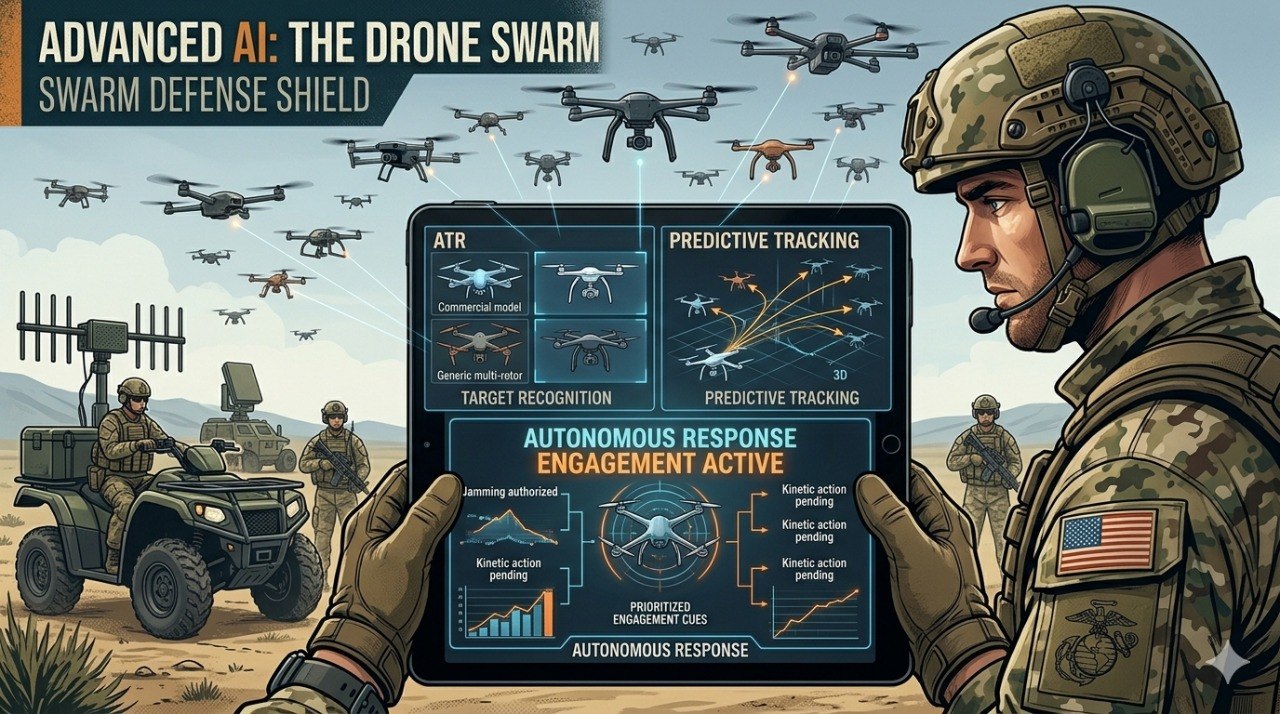
Effective lightweight counter-drone technology relies on Artificial Intelligence (AI) and Machine Learning (ML). These overcome challenges from drone volume, variety, and manual operation limitations.
AI-Powered Detection and Identification
AI algorithms analyze complex sensor data – visual, thermal, acoustic – to identify drone activity with greater precision. ML models trained on drone characteristics distinguish friendly from hostile UAS and classify drone types, reducing operator workload and fratricide risk.
Automated Tracking and Engagement
AI automates tracking, maintaining locks on drones during evasive maneuvers. It assists in selecting countermeasures, whether kinetic (interceptor drones, guided munitions) or non-kinetic (electronic warfare, directed energy). This automation is crucial for rapid response times.
Miniaturization and Efficiency
AI optimizes flight paths, power consumption, and sensor utilization for unmanned platforms, enhancing efficiency and endurance. This is critical for lightweight, autonomous C-UAS systems. For instance, Autel Robotics develops portable drone platforms with AI-driven flight capabilities for reconnaissance and potential counter-drone operations.
Specific USMC Initiatives and Future Outlook
The USMC emphasizes C-UAS capabilities for its distributed maritime operations concept and future force design. This includes equipping infantry battalions, reconnaissance units, and expeditionary logistics groups with drone defense.
Exercises like 'Bold Quest' and 'Cyber Flag' test emerging C-UAS technologies. The USMC focuses on networked C-UAS systems that share threat data, creating layered defense. AI-enabled swarming counter-UAS capabilities are also of significant interest.
The future of Marine Corps airpower will involve significant integration of unmanned systems. Lightweight, AI-powered counter-drone technology is becoming a foundational element, ensuring freedom of action in contested airspace. Continued investment and rapid acquisition are crucial for maintaining dominance.
What This Means for the Indian Armed Forces
India faces a similar, if not more complex, drone threat, particularly from state-sponsored adversaries. Existing Indian counter-drone systems, such as the DRDO Anti-Drone System and BEL's D4 system, offer robust capabilities. Notably, ideaForge's indigenous solutions highlight India's growing domestic C-UAS potential, aligning with the 'Make in India' initiative and the development of an Integrated Drone Detection and Interdiction System. However, recent operational experiences, such as the hypothetical 'Operation Sindoor' in May 2025 against Pakistani UAVs and Turkish Bayraktar variants, would likely reveal critical gaps. The performance of current systems against sophisticated, multi-rotor and fixed-wing drones necessitates a sharper focus on lightweight, rapidly deployable solutions. The USMC's emphasis on portability and AI integration is directly relevant to India's Northern Command operations along the Line of Control (LAC). Adapting this lightweight doctrine could significantly enhance the situational awareness and defensive posture of forward-deployed troops against persistent, low-cost drone threats, offering a more agile response than relying solely on larger, fixed C-UAS installations.
Conclusion: Adapting to the Unmanned Threat
The US Marine Corps faces a clear danger from adversary drones. To maintain its edge, the service prioritizes lightweight, AI-enhanced counter-drone technologies. These must be portable, rapidly deployable, and capable of neutralizing threats with speed and precision. The successful integration of AI and ML into C-UAS systems will enable Marines to operate effectively in future conflicts. Continued investment in these capabilities will define the future success of Marine Corps airpower.